
The Canvas of Sanctuary: Finding Harmony in the Modern Wilderness
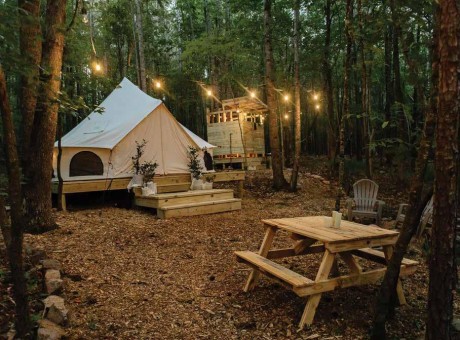
The human relationship with nature has undergone a drastic transformation over the last century. As urban environments expand and digital connectivity dominates daily life, the innate human need to connect with the natural world—often referred to as biophilia—has become increasingly compromised. The provided image serves as a visual thesis on how modern society seeks to reconcile this division. It depicts a structured, comfortable glamping site nestled deep within a dense forest, complete with a canvas bell tent, a wooden picnic table, structured decking, and warm string lights. Far from representing a complete abandonment of civilization, the scene illustrates a deliberate, curated intersection between human comfort and raw wilderness. It symbolizes the contemporary quest for sanctuary, reflecting a desire to return to nature without entirely severing the safety nets of modern infrastructure.
At the core of the image is the canvas bell tent, elevated on a clean wooden platform. This architectural choice is highly symbolic. The tent itself represents a transient, low-impact presence in the woods, nodding to traditional modes of wilderness exploration and nomadic living. However, its placement on a solid wooden deck demonstrates a desire for stability, elevation, and separation from the damp, unpredictable forest floor. This juxtaposition highlights a fundamental truth about the modern traveler: while there is a deep yearning to be surrounded by the elements, there remains a parallel need for physical security and predictability. The structured steps leading into the tent act as a literal and metaphorical transition zone, bridging the untamed, leaf-strewn ground with a clean, managed interior space.
Furthermore, the illumination of the campsite offers a profound commentary on how technology can enhance, rather than disrupt, our appreciation of nature. Golden string lights drape across the clearing, casting a warm, intentional glow over the scene. In the wilderness, darkness is traditionally associated with vulnerability, unknown hazards, and isolation. By introducing artificial light, the space is instantly transformed from an intimidating forest into an inviting, domestic outdoor living room. The lights do not conquer the darkness; instead, they coexist with it, softening the boundary between the wild night and the human habitat. This curated ambiance suggests that modern peace of mind often relies on a careful blending of natural surroundings and comforting, familiar technologies.
Beyond individual comfort, the arrangement of the campsite emphasizes the enduring importance of community and shared experiences. The wooden picnic table situated in the foreground serves as a universal symbol of gathering, breaking bread, and conversation. In a world increasingly fragmented by digital screens and solitary routines, an outdoor upperhousefarmglamping.com dining space invites people to slow down and engage in face-to-face connection. Surrounded by towering trees, the setting strips away the superficial distractions of daily life, encouraging authentic communication and shared reflection. The presence of the table implies that the true value of retreating into nature is not merely isolation, but the opportunity to rebuild connections with oneself and with others in a neutral, grounded environment.
Ultimately, the image presents a nuanced vision of contemporary environmental engagement. It suggests that the modern return to nature does not require extreme survivalism or the total rejection of societal advancements. Instead, true sanctuary is found in balance. By blending the organic beauty of the forest with the thoughtful design of human architecture, the campsite becomes a space of restoration. It honors the wilderness while respecting human limitations, creating an accessible gateway for weary individuals to unplug, recharge, and rediscover their place within the natural order.